Kew Mae Pan Trail: The 3-Hour Hike That Requires a Guide
Kew Mae Pan requires an early start and mandatory guide. We hiked it in December. Here's what made it worth it, and what I'd tell first-timers

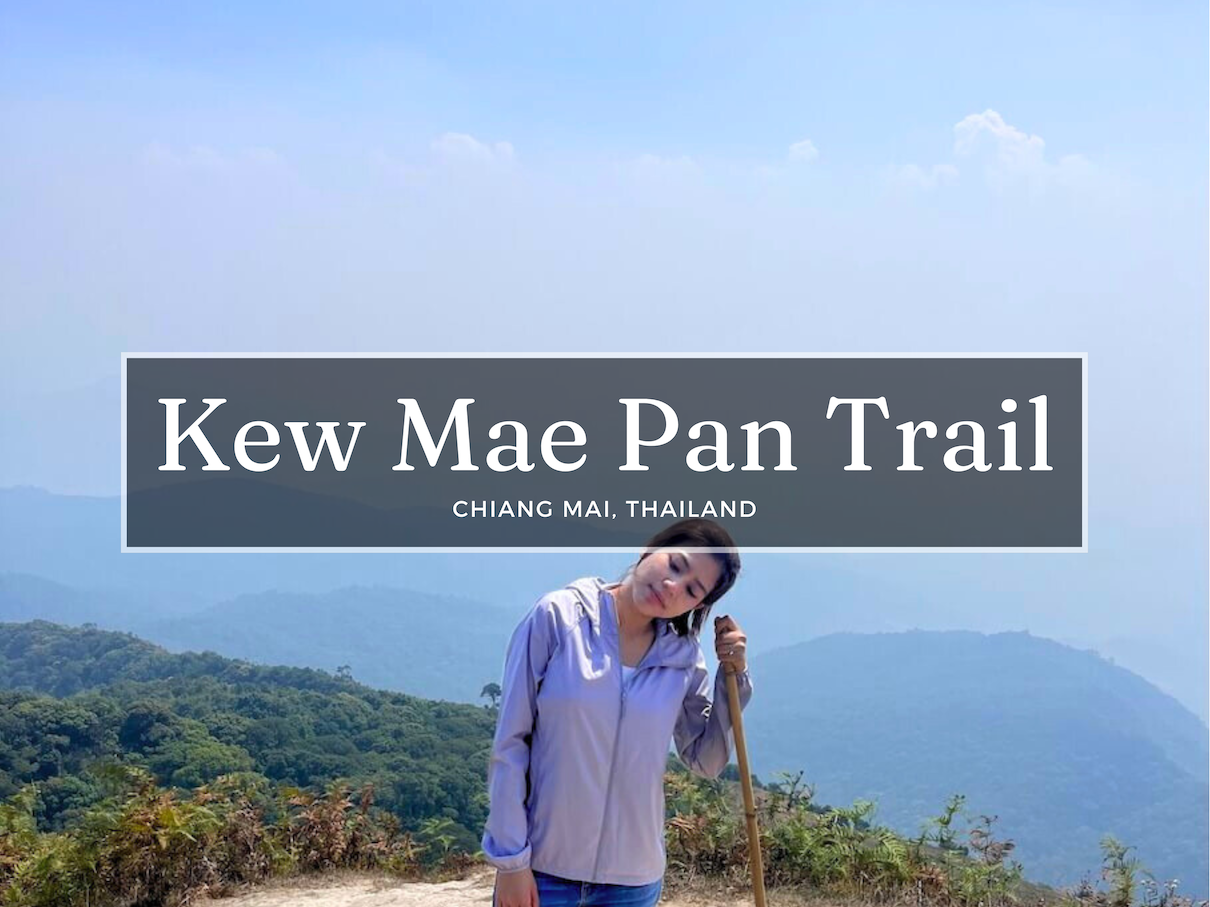
During our second trip to Chiang Mai, we knew we had to visit Doi Inthanon National Park—the “must-go” destination we missed the first time.
This time, we set our sights on the Kew Mae Pan Nature Trail, a highlight for anyone who loves trekking and nature. The Kew Mae Pan Nature Trail is at the 42 km mark along the Chom Thong - Doi Inthanon Peak Road. At an elevation of about 2,000 meters, this 3.2 km trail offered us a mix of lush rainforest and stunning mountain ridge views.
Guided by a local, this experience turned out to be one of the most memorable parts of our trip to Doi Inthanon National Park.
How to Get to Kew Mae Pan
The drive to Doi Inthanon National Park from Chiang Mai takes about 1.5 hours, but it’s closer to 2 hours to reach the Kew Mae Pan Nature Trail, which is deeper inside the park. Here’s what we found about transportation:
- Driving or Motorbike: If you want flexibility and plan to explore other spots in the park after the hike, this is the best option.
- Taxi or Grab: Private taxi services, like this one, are convenient but pricier.
- Public Transport: Songthaews are cheaper but involve 1-3 transfers and take 2.5-3 hours each way. Unless you’re on a tight budget, I wouldn’t recommend this option.
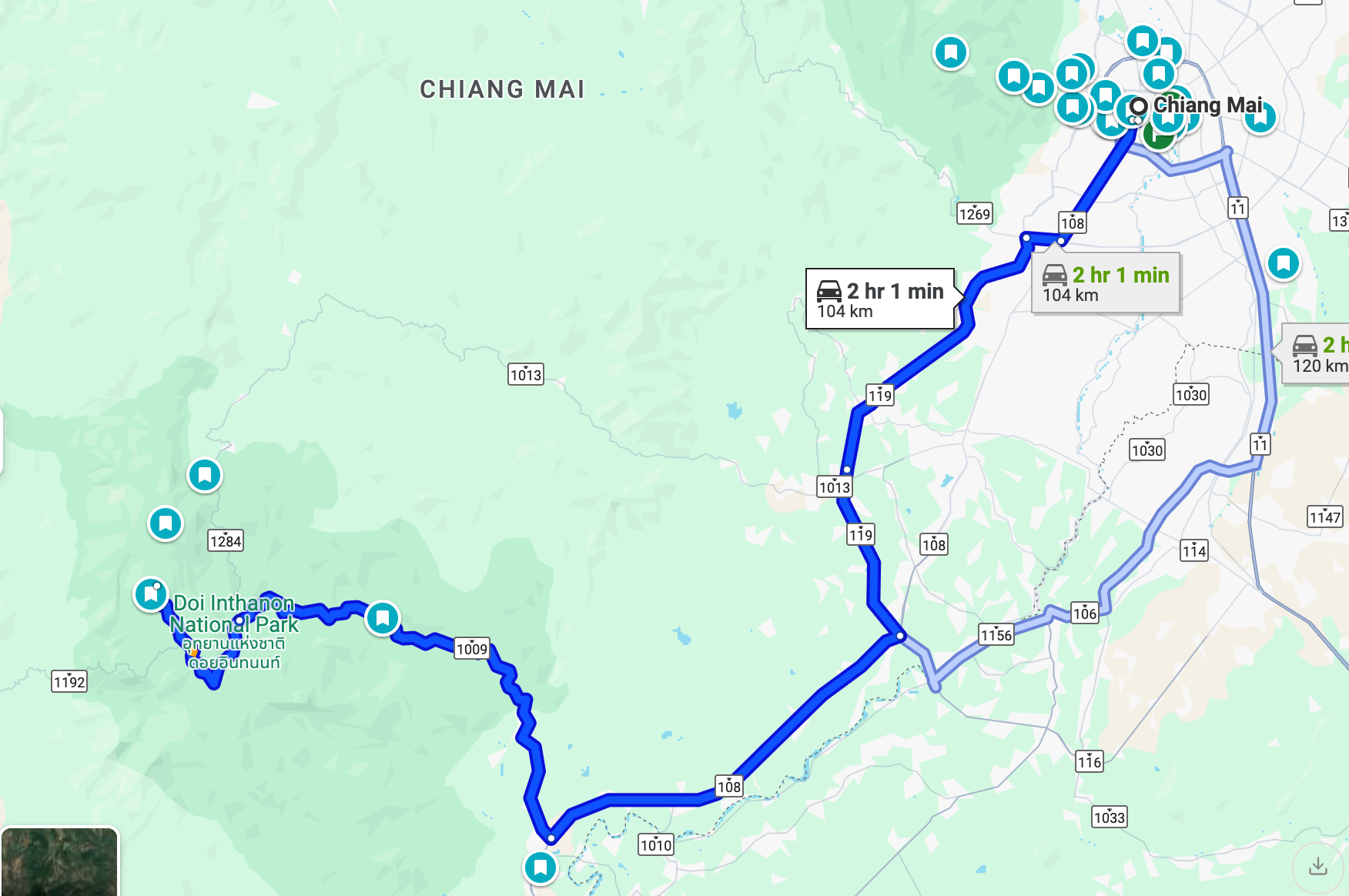
Tip: Driving also gives you the freedom to visit other attractions, like Wachirathan Waterfall and the Twin Pagodas of Doi Inthanon, once you’re done hiking.
Kew Mae Pan Entrance Fee
- Doi Inthanon National Park: 300 Baht for adults and 150 Baht for children aged 3-14. Thai citizens pay 60 Baht (adults) and 30 Baht (children).
- Kew Mae Pan trail fees are included in the park entrance fee.
The Hiking Experience
Guide Requirement: Guides are mandatory for the Kew Mae Pan Nature Trail. These local Hmong hill tribe guides are experienced with the route, though they don't speak much English. While the trail is quite straightforward, hiring a guide supports the local community and conservation efforts.
Arranging a guide is easy. We simply arrived at the trail entrance, paid the 200 Baht fee each, and were assigned a guide within minutes. They even provided us with wooden hiking sticks for support.
Hiking the Kew Mae Pan Nature Trail
The trail has 21 stations with signs explaining what you're looking at. We didn't pay much attention to the numbers, but the trail breaks into three different parts.
The Forest Section
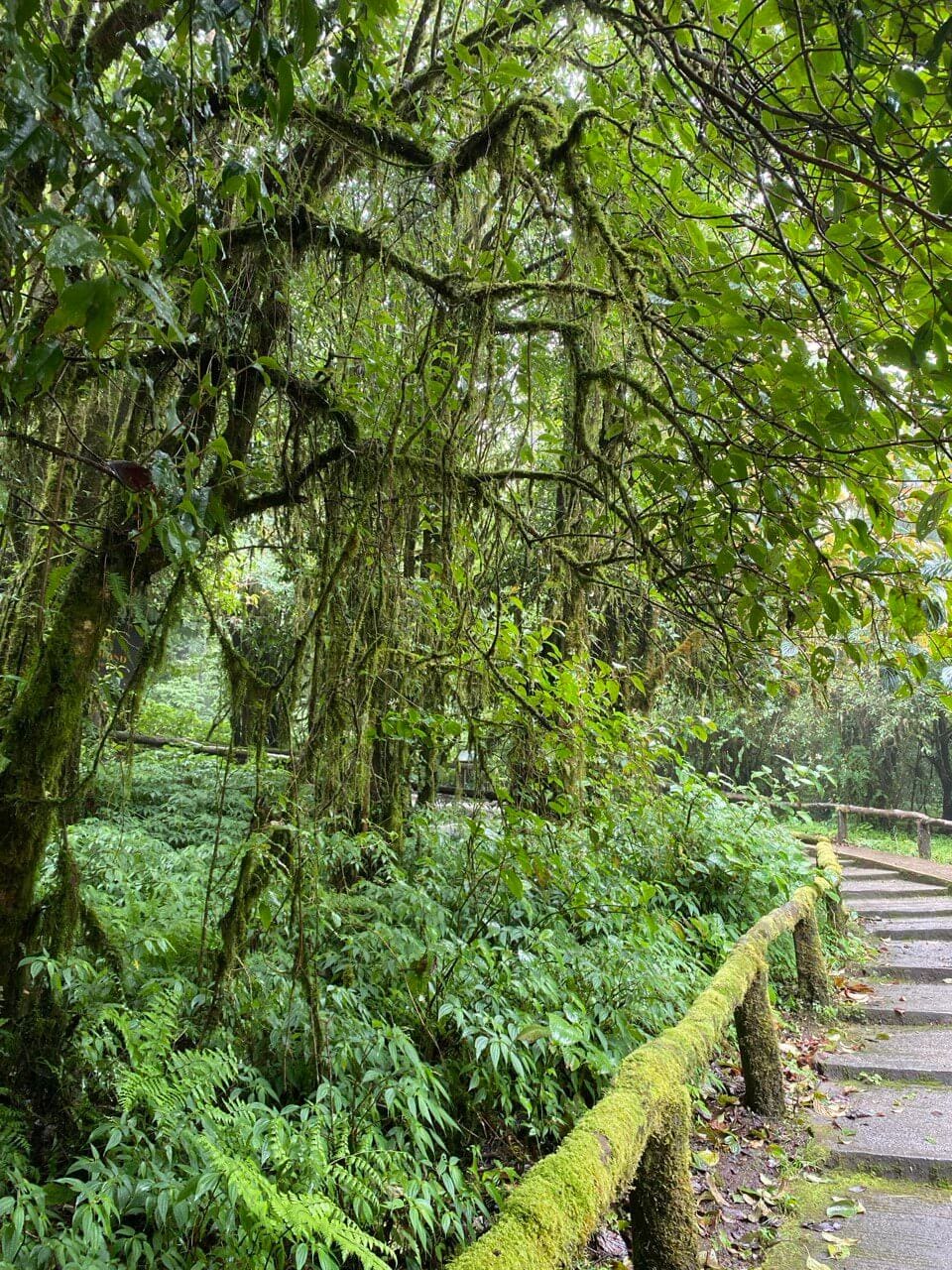
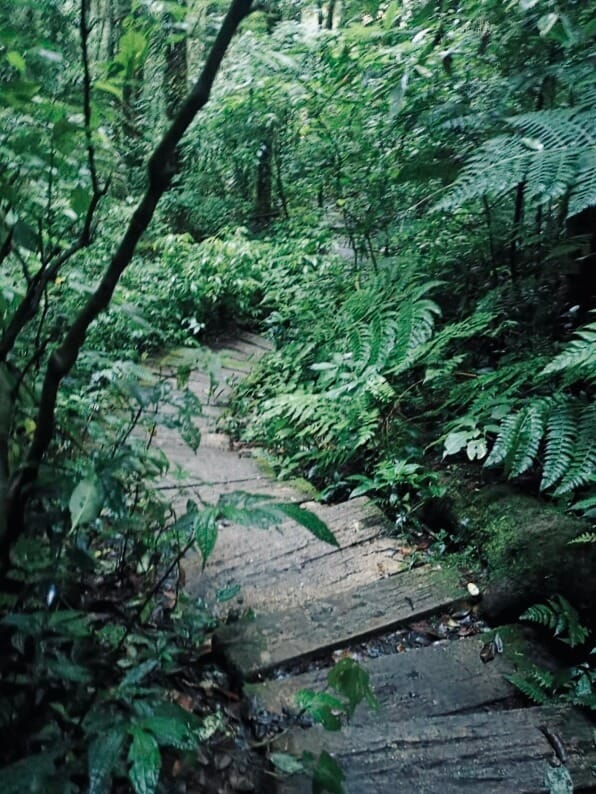
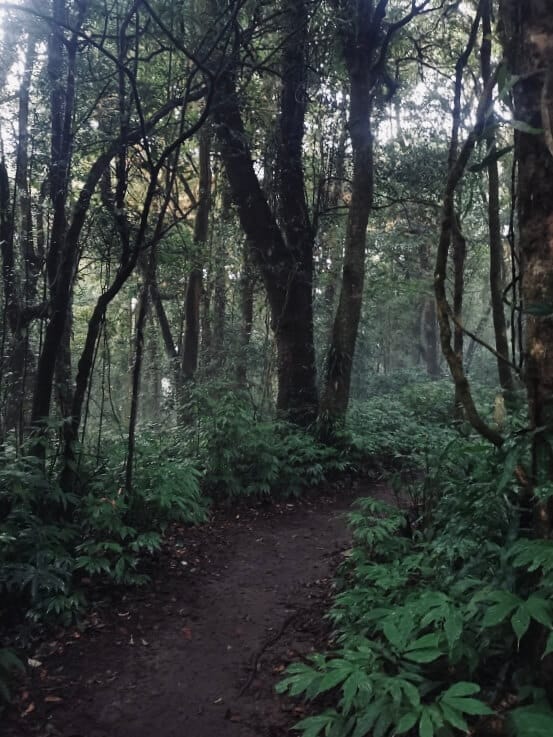
We started in cloud forest. It was very cool when we entered, since the canopy blocked most sunlight. Almost everything was damp, with moss covering the trees, wooden boardwalks slippery. The terrain also varies. Muddy patches, then wooden steps, then boardwalk again.
The Grassland
Then we came out of the forest into open grassland. Warm sun, open sky, views everywhere. We stopped and looked, and it was just a big open space, weird to think that we were still in dense forest just few steps back.
Our guide also shared fascinating tidbits about the plants and trees we encountered, including rhododendrons and edible berries.
This section is apparently famous for rhododendrons. Our guide called them "Thousand-year roses". Apparently, they bloom January to March, covering the hillside in red. Unfortunately, we visited in April so we missed them. Something to come back for I guess! Guide pointed to slopes where goral (mountain goats) sometimes appear early morning. Yet another thing that we didn't see. 😭
The Viewpoint
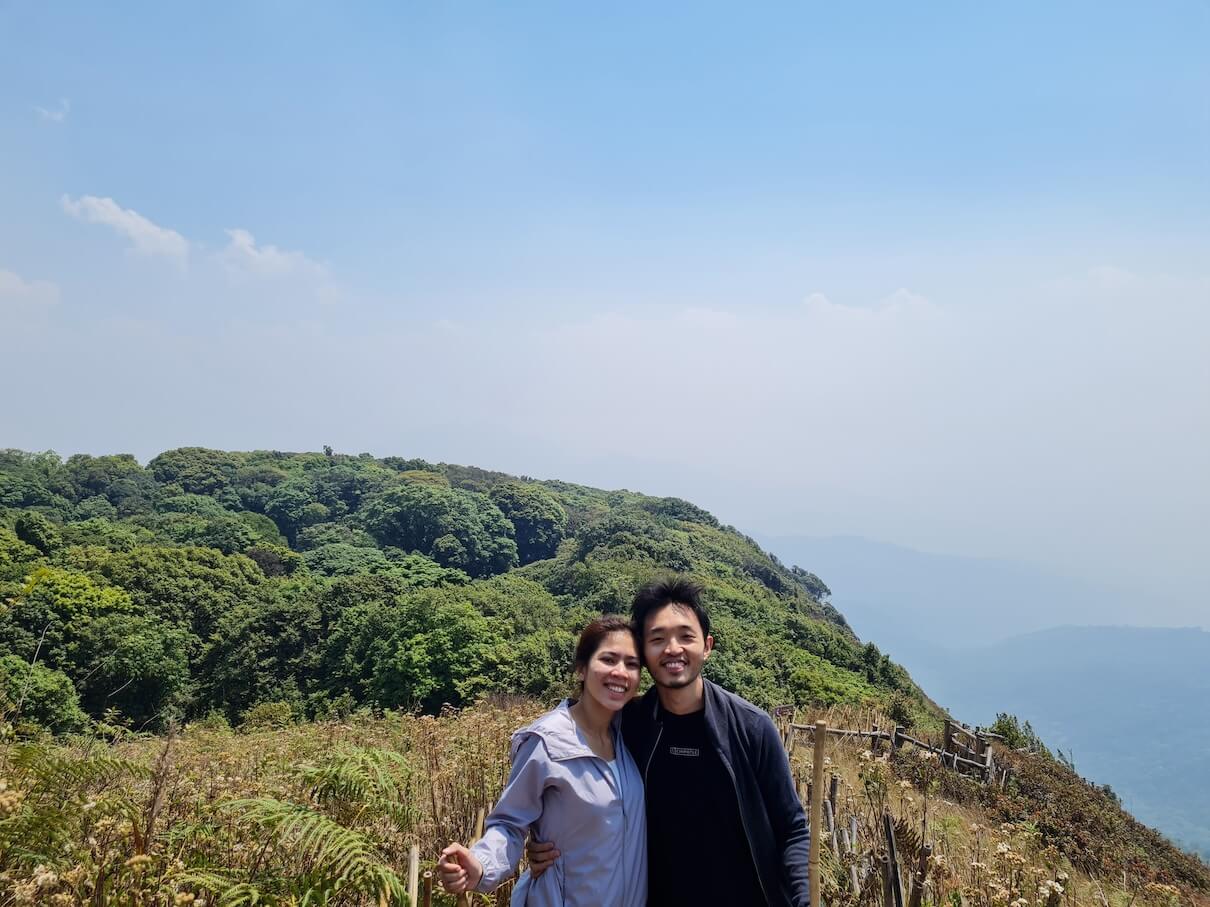
The trail’s highlight came when we reached the cliffside viewpoint (Kew Mae Pan viewpoint).
To one side, the majestic Twin Pagodas of Doi Inthanon were visible; to the other, a sea of clouds and rolling mountains stretched endlessly.
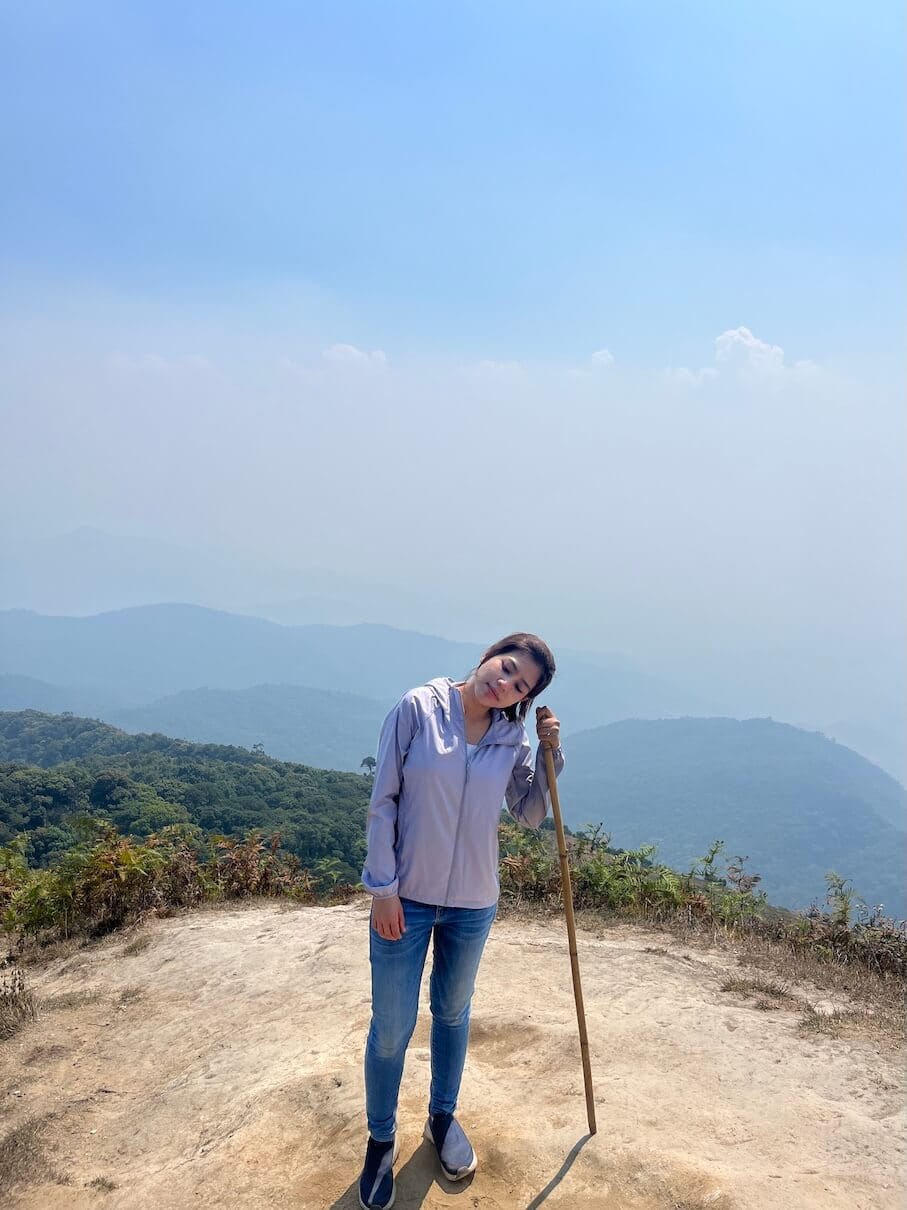
Kew Mae Pan Viewpoint
After soaking in the views and snapping a few photos, we made our way back down the trail, completing the loop. The return looped back through forest, and it was easier than going up since it's mostly downhill. At the end, our guide left us and gave him a tip as a thank you.
Wachirathan Waterfall
After finishing the Kew Mae Pan trail, we drove to the nearby Wachirathan Waterfall, a must-see in Doi Inthanon National Park. This massive waterfall is just a short walk (about a min) from the car park.
The mist from the powerful waterfall was a refreshing treat after our hike.
Climbing the stairs on the left gave us a good bird’s-eye view, while descending the stairs on the right offered better photo spots.
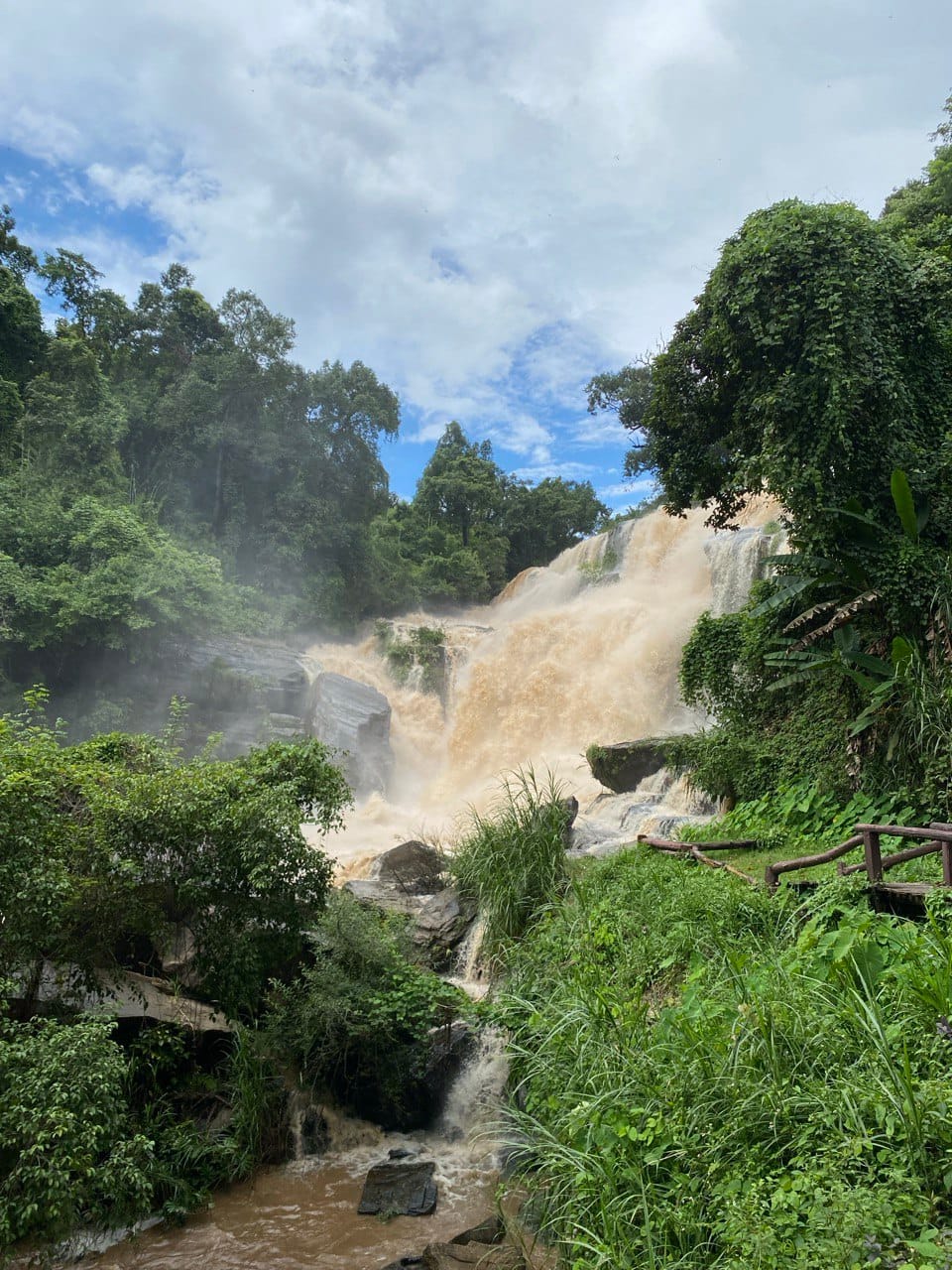
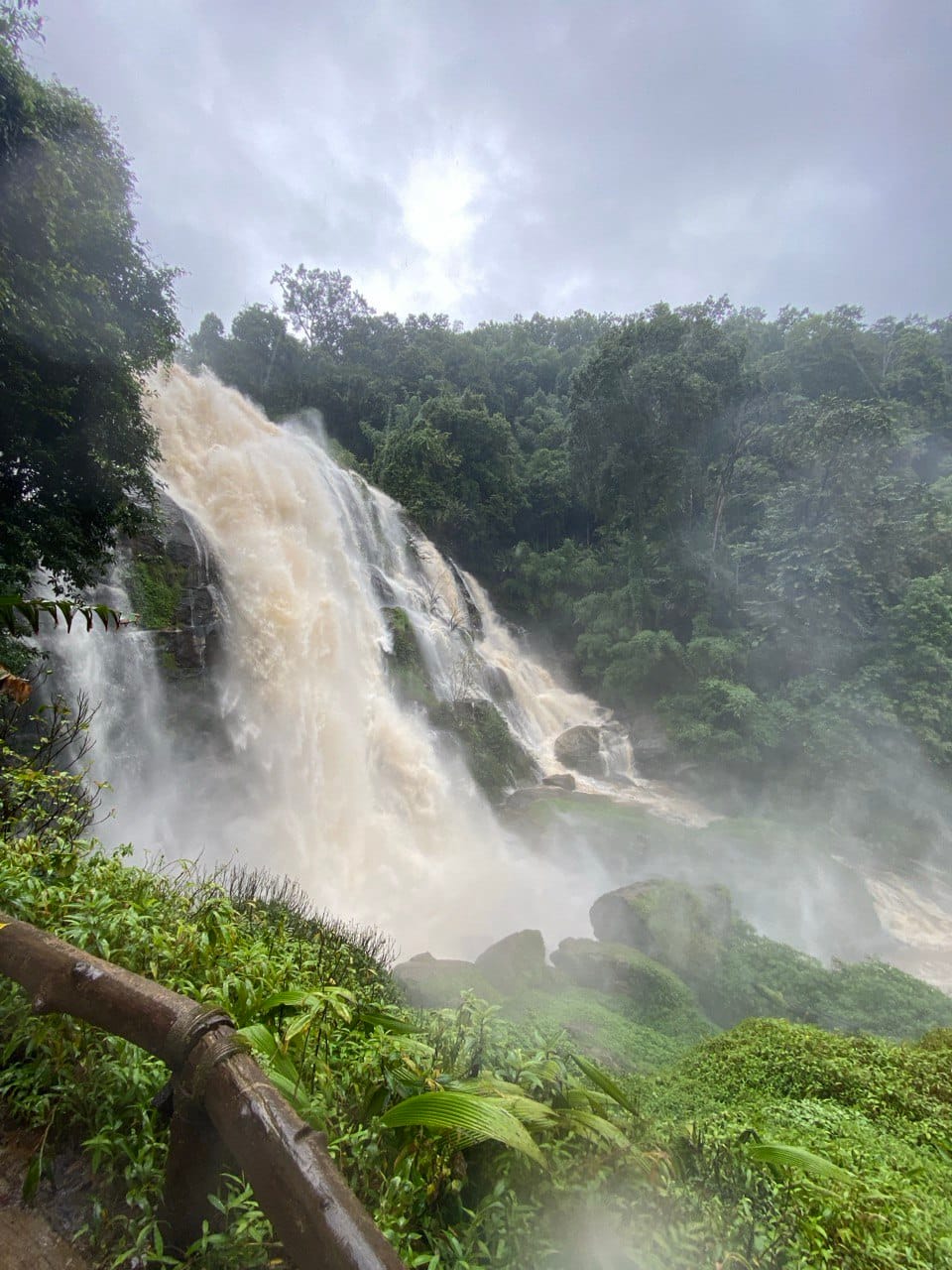
Wachirathan Entrance Fee: Covered under the Doi Inthanon National Park admission.
After our sweaty hike, the cool mist of Wachirathan waterfall was a good way to refresh. This stop is an essential inclusion on any Doi Inthanon itinerary.
Wachirathan waterfall
Trail Difficulty Level
- Length: 3.2 km.
- Difficulty: Easy - Moderate. Although there are plenty of steps, it’s definitely less challenging than hikes like the Dragon Crest Mountain in Krabi. A basic fitness level should be sufficient.
The Other Doi Inthanon Trails
Doi Inthanon has three main hiking trails, and we only did Kew Mae Pan. Here's what we learned about the others from talking to people and reading up afterward.
Kew Mae Pan (what we hiked):
- Most dramatic views - sea of clouds, Twin Pagodas visible, open mountain panoramas
- Mandatory guide at 200 baht per group
- 3.2 km loop that took us about 2 hours
- Can get crowded on weekends from November to February
- Famous for rhododendron blooms from January to March
Pha Dok Siew Nature Trail:
- Quieter with more immersive forest experience
- Also requires a guide, but it's managed by the Karen hill tribe instead of Hmong, so it supports a different local community
- Mostly downhill from what we heard, so easier terrain
- Less dramatic views but apparently more peaceful atmosphere
We didn't do this one since we specifically wanted the mountain views, but several people told us they actually preferred Pha Dok Siew for the forest experience and lack of crowds.
Ang Ka Nature Trail (near the summit):
- Free and doesn't require a guide
- Very short - under 1 km and takes maybe 20-30 minutes
- Just a cloud forest walk with boardwalks
- No mountain views at all, just forest and birds
- The trail was virtually empty when we drove past it
Why we choose Kew Mae Pan trail:
We chose Kew Mae Pan specifically for the views, and it delivered - the sea of clouds, the open ridgeline, the Twin Pagodas in the distance. That's what we came for.
If you only have time for one trail and want dramatic views, do Kew Mae Pan. If you prefer quiet forest over views, maybe Pha Dok Siew is probably the better choice. And if you have a full day, you could do Kew Mae Pan early in the morning and then stop at Ang Ka on your way to the summit afterward. That's what we should have done.
Next time we visit Doi Inthanon, we'll try Pha Dok Siew to compare the two experiences.
Best Times to Visit Kew Mae Pan
The trail is open November through May. It opens at 6am, last entry 4pm. It is also closed from June through October.
When We Went
We visited in early April, and the trail was open with good weather and clear views. We could see the sea of clouds, mountains, everything. But afterward we learned something I wish someone had told us before - March through May is what locals call "smoky season."
The Smoky Season Problem
Northern Thailand farmers burn their fields from March to May to prepare the land for planting, which creates thick haze that sits over the mountains for weeks.
What this means for hiking:
- Views mostly disappear - no sea of clouds, no mountain panoramas, just grey haze
- Air quality gets bad and breathing feels heavy, especially at altitude
- Your eyes and throat can get irritated
We honestly got lucky with our April visit since we had relatively clear air, but friends who came in late March said the haze was so thick they could barely see the Twin Pagodas from the viewpoint. They said it was a total waste of the two-hour drive.
Locals we talked to said they avoid the mountains entirely during smoky season. The trail is technically open, but you're hiking through murky air to see not much.
November to February
If you can choose when to visit, November to February is the window.
The temperatures are cool, it can drop below 10°C in the mornings, which feels great for hiking. You get clear skies and the best visibility for views, and if you time it for January or February, that's when the rhododendrons bloom.
We'll come back in January next time, since we want to see those "thousand-year roses" everyone talks about and get the full views this trail is famous for without worrying about the haze.
Crowds
Kew Mae Pan is one of the most popular trails in Doi Inthanon.
During our weekday April trip, we barely saw anyone. Maybe three or four other groups in total.
However, friends who visited Saturday in December had a different experience. The trail itself was packed and it was hard to get photos without people. Weekends during November to February are apparently busy.
If you're going peak season:
- Arrive when it opens at 6am
- Go on a weekday if possible
- Or just accept crowds
Views would be worth it even with crowds for us. But if you hate crowded trails, time it carefully.
Kew Mae Pan is popular, and it shows depending on when you go.
We went on a weekday in April and barely saw anyone. Maybe three or four other groups on the entire trail. It felt peaceful and uncrowded.
But friends who visited on a Saturday in December had a completely different experience. The trail itself felt packed with groups everywhere, making it hard to get photos without people in them.
Apparently weekends during the November to February peak season are consistently busy.
If you're planning to go during peak season, you can either arrive right when the trail opens at 6am, choose a weekday if possible, or just accept that you'll be sharing the trail with lots of other people.
What to bring & wear
- What to Wear:
- Layered clothing to adapt to temperature changes. It’s warmer at the base and cooler at the top.
- Sturdy hiking shoes with good grip for the slippery rainforest sections.
- Bring: Water, snacks, sunscreen, and a camera.
Layers!
The temperature difference between the forest and grassland sections was more noticeable than we expected.
The forest sections stayed cool and damp the whole time, around 15-20°C, and it felt like walking with air-con. But when we emerged onto the grassland, it was immediately warmer since the sun made about a 5-7 degree difference.
We both took our jackets off in the grassland section and then put them back on for the forest descent. We wore Uniqlo's UV pocketable parka that's easy to remove and pack, which works better than a bulky jacket you can't easily stow away.
Footwear Really Matters
The wooden boardwalks get slippery, especially early morning with dew or if there's been mist overnight.
If you have hiking boots, this is the hike to wear them for (we didn't have). If you don't have boots, at least wear shoes with deep treads and good grip, not fashion sneakers with smooth soles.
Things We Didn't Know Before Going
Before we hiked Kew Mae Pan, we had the same questions most people probably have. Here's what we learned.
Do you really need a guide?
Yes, guides are mandatory for Kew Mae Pan. You can't hike it without one.
We paid 200 baht at the trailhead, which covers your whole group up to 10 people, and we were assigned a local Hmong guide immediately. There's no advance booking system - you just show up, pay, and go.
Our guide spoke maybe 20-30 words of English total. He pointed things out along the way, like the "Twin Pagodas", but mostly spoke Thai to Kwang.
Honestly, the trail is straightforward enough that we probably wouldn't have gotten lost without a guide, but the guide fee supports the local community and helps fund conservation efforts. We were fine with it since it's part of the experience.
When do the rhododendrons bloom?
The rhododendrons bloom from January to March, with the peak blooms happening in January and February.
We visited in April and missed them completely.
How hard is the trail actually?
We'd call it low-mid difficulty.
The 3.2 km includes a lot of steps, especially at the start when you're climbing through the forest section.
It's definitely easier than Dragon Crest Mountain in Krabi. But it's harder than a flat beach walk. Somewhere in between.
Most people we saw seemed to be managing fine, though we did see a few people stopping frequently to catch their breath. If you can handle stairs and have basic fitness, you should be okay - just pace yourself on the uphill sections.
How long does it take?
We took about 2 hours total, and that included stopping for photos at the viewpoint and taking our time.
I think most people take between 1.5 to 2.5 hours, depending on how long they spent at the viewpoints taking pictures. You could probably rush through it in an hour if you really tried, but the viewpoint is the whole point of doing this hike, so there's no point to rush.
Can you visit without a car?
Technically yes, but we really wouldn't recommend it.
Public songthaews from Chiang Mai to Doi Inthanon require multiple transfers and take 3+ hours each way, which means you'd spend most of your day just traveling instead of hiking.
If you don't ride motorbikes and don't want to drive yourself, joining a tour makes more sense than trying to figure out the public transport connections. Or you could split a private taxi with other travelers to reduce the cost.
When is the trail actually open?
The trail is open from November 1 through May 31 every year, with daily hours from 6am to 4pm for last entry.
It's completely closed from June through October for forest recovery, so don't plan your trip during those months - it's not just harder to access, it's fully closed and you won't be able to hike it.
Overall Thoughts on this hike
I’m trying to be more discerning in my reviews, but honestly, Kew Mae Pan is an undeniable highlight of any Chiang Mai or Doi Inthanon itinerary.
While visiting the twin pagodas is worthwhile, the Kew Mae Pan trekking experience itself is one I will cherish, complete with stunning views of rolling hills and clouds.
If there's one thing I could encourage you to do, it's to lace up your hiking boots and experience this trail for yourself.